Volume 23 - Issue 4 - October 2021
|
|
|
|
|
|
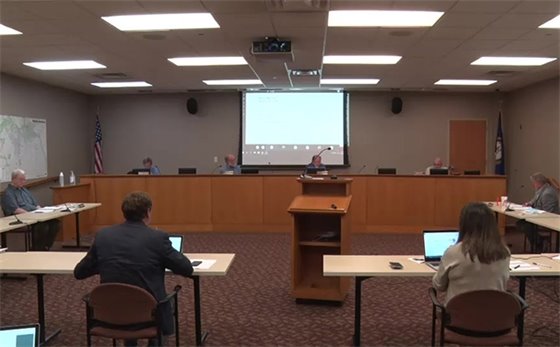
Board of Directors Meeting SummaryThe following action items passed by majority vote during the regular meeting of the Sanitation District No. 1 Board of Directors held Tuesday, September 21, 2021. 38% Sodium Bi-Sulfite ContractThe SD1 Board awarded a contract for 38% Sodium Bi-Sulfite for the use at Dry Creek Treatment Plant for di-chlorination to PVS Chemical Solutions Inc. The award is for a one-year contract in the amount of $154,100 with an option to renew up to two additional one-year terms. This chemical is used at Dry Creek to treat the effluent for disease-causing bacteria before it enters the receiving stream. The chemical also neutralizes any residual chorine from passing to the receiving stream., thereby meeting Total Residual Chlorine permit limitations. SD1 Goals Advanced:
Environmental Stewardship, Optimal Infrastructure Management
Reservation of Sanitary Sewer Capacity RequestsFour new requests for reservation of sanitary sewer capacity were approved by the SD1 Board. The reservation of capacity program provides SD1 with knowledge of development, an opportunity to assess system capacity, track committed capacity in balance with system operations and capital improvements and provide developers assurance of capacity. This process benefits the communities served by SD1 by providing planning tools for economic vitality. SD1 Goals Advanced: Financial Viability, Optimal Infrastructure Management,
Stakeholder Support, Environmental Stewardship
Request for Storm Water Public Cost-Share Program
Two requests for the Private Cost-Share Program were received this month. One request was from the City of Elsmere to address flooding and drainage issues on Plymouth and Feather lanes and the other was from the City of Newport for installation of storm water inlets in three different areas of Waterworks Road to address draining and ponding issues following rain events.
The SD1 Public Cost-Share Program provides financial assistance to co-permittees for the installation of new storm water infrastructure that addresses drainage issues associated with a dedicated and accepted right-of-way, impacting a right-of-way or caused by or related to public infrastructure drainage. Upon satisfactory completion of the project, SD1 assumes ownership of the new infrastructure and reimburses the co-permittee a percentage of the project cost. Currently, the SD1 reimbursement percentage is set at 50% of the cost.
SD1 Goals Advanced:
Operational Efficiency & Resiliency, Optimal Infrastructure Management Details about the SD1 Strategic Business Plan are available at: https://www.sd1.org/223/Strategic-Business-Plan. |
|
|
|
SD1 Names Steven
Epplen Director of Human Resources
SD1 has announced that Steven Epplen has been selected as its Director of Human Resources.
Epplen has served as Human Resources Manager at Jedson Engineering, Inc., since 2011, where he provides daily HR support and oversees recruitment, training, staff development, succession planning and performance management.
As Director of Human Resources, Epplen will be responsible for the development and implementation of human resources policies, programs and services, including recruitment, retention, training, legal compliance and employee benefits.
“We’re excited to add Steven to a strong leadership team,” said SD1 Executive Director Adam Chaney. “He has a demonstrated history of quality HR management and problem-solving in fast-paced environments, and that will be important as SD1 continues to grow and evolve as our region’s leader in wastewater and storm water management.”
Learn More: https://www.sd1.org/CivicAlerts.aspx?AID=99
|
|
|
|
Check Out Our Clean H2O40 Celebration Photo Gallery
|
|
|
|
|
|
Carpet Replacement Coming to Main Office Third Floor
Beginning in mid-October, Spectra Flooring will be replacing the carpeting on the third floor of the Main Office. As with this summer's second floor replacement, daily updates will be emailed to all who are affected. Materials are currently on order and we will announce a start date once the installation schedule is finalized.
|
|
|
|
|
|
Employee Assistance Program
SD1 cares about the health and well-being of its employees and recognizes that a variety of problems can disrupt their personal and work lives.
Through the St. Elizabeth Employee Assistance Program (EAP), SD1 provides confidential access to professional counseling services for help in confronting such problems as alcohol and other substance abuse, marital and family difficulties, financial or legal troubles, and emotional distress. The EAP is available to all employees and their immediate family members, offering problem assessment, short-term counseling (typically up to 8 free sessions) and referral to appropriate community and private services.
The EAP is strictly confidential and is designed to safeguard the participant’s (employee or family member) privacy and rights. All counselors are guided by a Professional Code of Ethics.
Personal information concerning employee participation in the EAP is maintained in a confidential manner. No information related to an employee’s participation in the program is entered into the personnel file.
There is no cost for employees to consult with an EAP counselor. If further counseling is necessary, the EAP counselor will outline community and private services available. It is ultimately the responsibility of the patient to verify insurance coverage, and any costs that are not covered are the responsibility of the patient.
Call the EAP at (859) 301-2570 to contact an EAP counselor.
|
|
|
|
October is Fire Prevention Month
FAQs about smoke and carbon monoxide (CO) alarms What’s the difference between smoke alarms and carbon monoxide (CO) alarms? Smoke alarms sense smoke well before you can, alerting you to danger. In the event of fire, you may have as little as 2 minutes to escape safely. Carbon monoxide is an odorless, colorless gas that displaces oxygen in your body and brain and can render you unconscious before you even realize something is happening to you. Without vital oxygen, you are at risk of death from carbon monoxide and alert you so you can get out, call 9-1-1, and let the professionals check your home.
Learn the sounds of fire safety Is there a beep or a chirp coming out of your smoke or carbon monoxide alarm? What does it all mean? Knowing the difference can save you, your home, and your family! Make sure everyone in the home understands the sounds of the smoke and carbon monoxide alarms and knows how to respond.
What is your alarm telling you?
Smoke Alarms
- A continued set of three loud beeps – beep, beep, beep – means smoke or fire. Get out, call 911 and stay out.
- A single “chirp” every 30 or 60 seconds means the battery is low and must be changed.
- All smoke alarms must be replaced after 10 years.
- Chirping that continues after the battery has been replaced means the alarm is at the end of its life and the unit must be replaced.
Carbon Monoxide (CO) Alarms - A continuous set of four loud beeps – beep, beep, beep, beep – means carbon monoxide is present in your home. Go outside, call 9-1-1 and stay out.
- A single chirp every 30 or 60 seconds means the batter is low and must be replaced.
- CO alarms also have “end of life” sounds that vary by manufacturer. This means it’s time to get a new CO alarm.
- Chirping that continues after the battery has been replaced means the alarm is at the end of its life and the unit must be replaced.
Make a Home Safety Action Plan Make the first Saturday of each month “Smoke Alarm Saturday!” - Smoke alarms should be installed in every sleeping room, outside every sleeping area, and on every level of the home, including the basement. Do not put one in your bathroom or kitchen.
- Test all of your smoke alarms by pushing the test button. If it makes a loud beep, beep, beep sound, you know it’s working. If there is no sound or the sound is low, it’s time to replace the battery. If the smoke alarm is older than 10 years old, you need to replace the whole unit.
- Make sure everyone in the home knows the sound of the alarm and what to do when it sounds
Develop a home fire escape plan and practice it at least twice a year! - Draw a map of your home, marking two ways out of each room, including windows and doors.
- Children, older adults, and people with disabilities may need assistance to wake up and get out. Make sur they are part of the plan.
- Make sure all escape routes are clear and that doors and windows open easily.
- Pick an outside meeting place (something permanent like a neighbor’s house, a light post, mailbox or stop sign) that is a safe distance in front of your home where everyone can meet.
- Practice! Practice! Practice! Practice day and nighttime home fire drills.
Remember: When you hear a Beep, Get on your Feet! Get out and stay out. Call 9-1-1 from your outside meeting place
Hear a Chirp, Make a Change! A chirping alarm needs attention. Replace the batteries or the entire alarm if it is older than 10 years old. If you don’t remember how old it is, replace it.
*information obtained from nfpa.org |
|
|
|
Safety PuzzleThe monthly Safety Puzzle is now available on the intranet under the Safety tab. If you have any questions, please contact Melissa Bradford. |
|
|
|
Lean SD1 Academy Tip:
Eliminating Waste is a Key to Efficiency
One of the best examples of process improvement projects centers around waste. Specifically, if you can identify and eliminate areas of waste within your processes, you can save time and produce higher quality end results.
One of the best ways to eliminate waste is to rely on Lean principles. Lean calls for teams to look for eight kinds of waste:
- Defects
- Excess processing
- Overproduction
- Non-utilized talent
- Sitting inventory
- Products waiting for the next step
- Unnecessary moving of products
- Inefficient motion of people
If you can identify any of these types of waste and restructure your processes to eliminate them, you’ll be well on your way toward more efficient processes that deliver value faster.
|
|
|
|
Comings, Goings and Anniversaries
September Arrivals- Steven Epplen, Human Resources
September Departures- Ben Ricketts
- Sean Sohi
- Kristina Napier
- Marcus Phillips
October Birthdays- 10/4 - Richard Dixon, Western Regional
- 10/4 - Michael Adams, Asset Management
- 10/4 - Brett Turner, Technical Services
- 10/8 - Aaron Moore, Collection Systems
- 10/8 - Peggy Henn, Finance
- 10/10 - Mark Griffith, Design & Construction Management
- 10/14 - Linda Hamberg, Finance
- 10/16 - Richard Middleton, Dry Creek Operations & Maintenance
- 10/16 - Angela Cook, Office of the Executive Director
- 10/17 - Maxwell Shirley, Western Regional
- 10/19 - Daniel Fletcher, Dry Creek Operations & Maintenance
- 10/20 - Jason Burlage - Development Services
- 10/20 - David Varney - Collection Systems
- 10/20 - Gary Lowe - Collection Systems
- 10/21 - Brian Berens, Small Plants
- 10/21 - Justin Lafollette, Collection Systems
- 10/22 - Gerald Biedenbender, IT
- 10/25 - Cristina Alexander, Dry Creek Operations & Maintenance
- 10/29 - Kevin Hunter, Development Services
- 10/30 - Flora Coffman, Finance
October Employment Anniversaries - Ricky Mullikin - 23 years
- Scott Lucas - 23 years
- Brian Berens - 21 years
- Raymond Simpson - 21 years
- Jennifer Tyson - 16 years
- David Koetting - 15 years
- Tina Graham - 15 years
- Kevin Hunter - 13 years
- Michael Holtz - 13 years
- Thomas Lind - 10 years
- Mark Manning - 10 years
- Karen Derrer - 10 years
- Donna Viox - 10 years
- Scott Guy - 9 years
- Lydia Watkins - 8 years
- Brooke Shireman - 7 years
- Olivia Backus - 6 years
- Mark Allen Groger - 3 years
- Carey McLaughlin - 1 year
Staff birthdays are also available in the daily calendar on The Pipeline. |
|
|
|
|
|