Board of Directors Meeting Summary
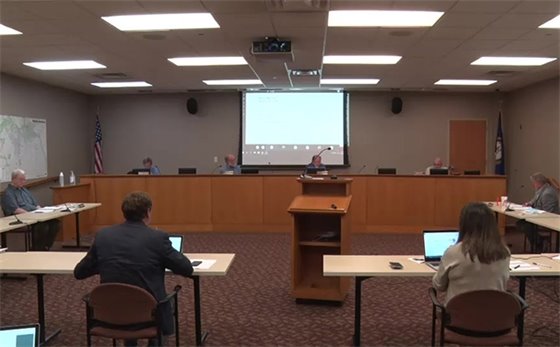
The following action items passed by majority vote during the regular meeting of the Sanitation District No. 1 Board of Directors held Tuesday, July 20, 2021.
Purchase Contract for Polymer SD1 awarded a contract to Polydyne Inc., for the purchase of the chemical Polymer at the unit prices submitted with its bid. Polymer is used at SD1’s regional treatment plants and is an essential part of the solids handling process that separates solids from liquids.
Solids handling is an essential part of treatment in order to physically remove solids from the waste stream. The goal of this process is to maximize capture rate of solids, allowing for more optimized dewatering of the sludge.
SD1 Goals AdvancedCustomer Satisfaction, Operational Efficiency and Resiliency,
Optimal Infrastructure Management
Purchase Contract for Sodium HypochloriteThe SD1 Board awarded a contract to Univar Solutions USA for the purchase of Sodium Hypochlorite in the amount submitted with its bid. SD1 and the Northern Kentucky Water District have an Interlocal Cooperative Agreement to competitively bid products and services that both entities have in common. As a result, both entities realize cost-savings by leveraging quantities, such as Sodium Hypochlorite. The chemical is used for odor and corrosion control as well as effluent disinfection, which is a requirement of state discharge permitting.
Sodium Hypochlorite is a chemical injected into effluent flow, allowing SD1 to destroy bacteria that may be present in the waste stream. It is used at the regional treatment plant locations.
SD1 Goals Advanced
Customer Satisfaction, Financial Viability, Environmental Stewardship,
Optimal Infrastructure Management
Dry Creek Bridge Rehabilitation Construction ProjectThe SD1 Board awarded a contract to Sunesis Construction Company of West Chester, Ohio, to rehabilitate a 40-year-old structurally unsound bridge which is the only access the Dry Creek Wastewater Treatment Plant. An inspection of the structure found it has experienced substantial movement in the box beams and separation in the expansion joints. Sunesis was the low responsive bidder with a total bid price of $763,581.45.
Plant operators began seeing movement in the bridge structure in 2016 and have since conducted annual investigations and monitoring, which revealed continued movement. As it is the only access to Dry Creek, rehabilitation of the bridge is critical.
SD1 Goals Advanced
Financial Viability, Operational Efficiency & Resiliency
Bromley Pump Station Upgrades – Construction and Equipment Procurement The SD1 Board awarded a contract to Building Crafts Inc., of Wilder, Ky., for the construction of the Bromley Pump Station Upgrades project in the amount of $24,458,000. A contract was also awarded to Xylem Water Solutions for three pumps and ancillary equipment in the amount of $1,383,617.93. As part of the Updated Watershed Plant (UWP) to increase combined sewer overflows (CSO) capture, the project includes the upsizing of pumping capacity at the existing station from 40 MGD to 45 MGD and the construction of a diversion structure and a new parallel 30 MGD pump station.
As part of the LEAN SD1 strategy to maximize return on investment of capital dollars, the Bromley Pump Station needs were assessed alongside CSO remediation projects within the Updated Watershed Plan, reducing design and consulting costs and resulting in earlier elimination of CSO than previously scheduled.
SD1 Goals Advanced
Financial Viability, Operational Efficiency, Optimal Infrastructure Management
Washington Street Flood Station MCC Upgrades - Design-Build ServicesThe SD1 Board awarded a contract to Wells Engineering PLC in the amount of $395,170 for design and build services for the Washington Street Flood Station motor control center (MCC) upgrades. The existing equipment has reached the end of its useful life and has experienced recent failures during flood pumping operations. The pump station is a core component of the Ohio River flood control system managed by SD1 as part of its ongoing regional wastewater and storm water responsibilities.
Due to the complexity of this project, and to reduce the time from design to construction, SD1 is using a build-design contract for these upgrades.
SD1 Goals Advanced
Environmental Stewardship, Optimal Infrastructure Management,
Optimal Infrastructure Management
Central Boone County Sewer Master Plan – Design of Phase III and IVThe SD1 Board awarded a contract to Tetra Tech of Cincinnati in the amount of $785,000 for the design and construction administration of Phases III and IV of the Central Boone County Master Plan projects. The Boone County Sewer Master Plan has prioritized the installation of sewers south of I-275 and north of the existing sewer conveyance tunnel to the Western Regional Water Reclamation Facility.
Based on its priority and in anticipation of potential federal funding, this project was included in the Fiscal Year 2022 budget. The construction of the CBCS project will eliminate the need for a Bullittsville EQ tank, which when combined with anticipated federal funding will provide $20M in capital savings over the course of the Clean H2O40 Amended Consent Decree timeline.
SD1 Goals Advanced
Environmental Stewardship, Operational Efficiency & Resiliency,
Optimal Infrastructure Management
Reservation of Sanitary Sewer Capacity RequestsThree new requests for reservation of sanitary sewer capacity were approved by the SD1 Board.
The reservation of capacity program provides SD1 with knowledge of development, an opportunity to assess system capacity, track committed capacity in balance with system operations and capital improvements and provide developers assurance of capacity. This process benefits the communities served by SD1 by providing planning tools for economic vitality.
SD1 Goals Advanced
Financial Viability, Optimal Infrastructure Management, Stakeholder Support, Environmental Stewardship
Request for Storm Water Public Cost-Share ProgramOne request for a storm water project cost increase for the Grace Avenue, Ft. Mitchell, cost-share project was approved by the SD1 Board. The project was initially approved by the Board in May 2020 at a cost contribution by SD1 of $158,000. Following increased costs during the design phase, the city requested an increased contribution of $71,200 to cover the overage. The project will address drainage issues at the intersection of Grace Avenue and Grace Court.
The SD1 Public Cost-Share Program provides financial assistance to co-permittees for the installation of new storm water infrastructure that addresses drainage issues associated with a dedicated and accepted right-of-way, impacting a right-of-way, or caused by or related to public infrastructure drainage. Upon satisfactory completion of the project, SD1 assumes ownership of the new infrastructure and reimburses the co-permittee a percentage of the project cost. Currently, the SD1 reimbursement percentage is set at 50% of the cost.
SD1 Goals Advanced
Operational Efficiency & Resiliency, Optimal Infrastructure Management
Request for Storm Water Private Cost-Share ProgramOne request from the City of Edgewood was approved by the SD1 Board. This project will address flooding and drainage issues on private property on Beech Drive.
The SD1 Private Cost-Share Program is aimed at assisting co-permittees in addressing private storm water issues that may have a public impact. Only co-permittees may apply for financial assistance through the program. This program was developed because long before SD1 assumed control of the region’s storm water management, cities and counties owned and maintained storm water infrastructure; regulations were less stringent; drainage plans were not always a priority; and storm pipes were often inadequate or never formally dedicated to public ownership. The result is a storm system that has a mix of privately and publicly owned infrastructure that can become overwhelmed by wet weather events in some areas. Currently the SD1 reimbursement is one-third up to $10K of the cost.
SD1 Goals Advanced
Operational Efficiency & Resiliency, Optimal Infrastructure Management
Details about the SD1 Strategic Business Plan are available at: https://www.sd1.org/223/Strategic-Business-Plan.