Volume 22 - Issue 9 - April 2021
|
|
|
|
|
|
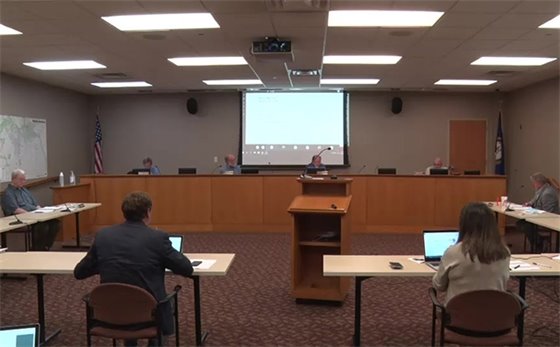
Board of Directors Meeting SummaryThe following action items passed by majority vote during the regular meeting of the Sanitation District No. 1 Board of Directors held Tuesday, March 16.
1. Master Service Agreement – Water Resource Management Services
A Master Service Agreement (MSA) for Professional Water Resource Management Services at the rates submitted with each proposal was awarded to the following firms: AECOM, Civil Environmental and Consulting, CT Consultants, DLZ, Fishbeck, Geosyntec, GPD Group, Gresham Smith, Hazen and Sawyer, Human Nature, JMT, LimnoTech, Power Engineers, Prime AE, RA Consultants, RESPEC Company, Stantec, Strand, Sustainable Streams, Tetra Tech, Third Rock, Wade Trim and Wood.
SD1’s approach to procuring professional services required for various water resource management services is based on the establishment of master service agreement (MSA) contracts. Tasks associated with water resource management services can be grouped into three categories: Program Management Assistance, Monitoring and Modeling Support, and Best Management Practices (BMP). Through the competitive bidding process a group of qualified firms are identified. A Master Services Agreement of standard terms and conditions are then entered into with each of the firms to establish a pool of as needed bidders for individual tasks. This allows SD1 to establish with successful bidders the standard terms and conditions upfront thereby expediting services and increasing efficiency in the process.
SD1 Goals Advanced: Financial, Operational Efficiency & Resiliency,
Optimal Infrastructure Management
2. Licking River Siphon - Design
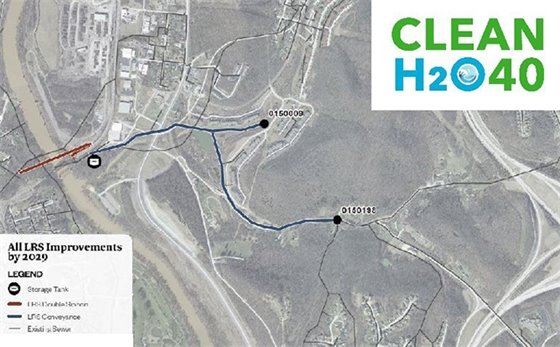
The Board awarded a contract to CT Consultants in an amount not to exceed $189,368 for engineering services for the design and to provide construction administration for the Licking River Conveyance Upsizing Project, Phase 1.
This project, along with the Licking River Equalization Tank project and the 12” Licking River Siphon project – all located in the City of Wilder – will reduce the sanitary sewer overflows (SSO) in the SD1 system by 41% or 47 MG when complete. In the Clean H2O40 Amended Consent Decree, the SSO percent reduction is 20% for the first milestone of July 1, 2023 and 75% for the second milestone of January 1, 2029. This project, in conjunction with the other capital projects included in the FY 2021 CIP, will ensure that we achieve these percent reductions by the specified milestone dates.
SD1 Goals Advanced: Operational Efficiency & Resiliency,
Optimal Infrastructure Management, Environmental Stewardship
3. Reservation of Sewer Capacity
Three new requests for reservation of sanitary sewer capacity were approved at the March 2021 meeting.
The reservation of capacity program provides SD1 with knowledge of development, an opportunity to assess system capacity, track committed capacity in balance with system operations and capital improvements, and provide developers assurance of capacity. This process benefits the communities served by SD1 by providing planning tools for economic vitality.
SD1 Goals Advanced: Financial Viability, Optimal Infrastructure Management,
Stakeholder Support, Environmental Stewardship
4. Storm Water Public Cost-Share
One new request from the City of Fort Wright was approved during the March 2021 Board meeting. This project will address public drainage issues at Redwood and Birchwood Drive in Fort Wright.
The SD1 Public Cost-Share Program provides financial assistance to co-permittees for the installation of new storm water infrastructure that addresses drainage issues associated with a dedicated and accepted right-of-way, impacting a right-of-way, or caused by or related to public infrastructure drainage. Upon satisfactory completion of the project, SD1 assumes ownership of the new infrastructure and reimburses the co-permittee a percentage of the project cost. Currently, the SD1 reimbursement percentage is set at 50% of the cost.
SD1 Goals Advanced: Customer Satisfaction, Financial Viability,
Stakeholder Support, Environmental Stewardship
Learn more about SD1's Strategic Business Plan goals at https://www.sd1.org/223/Strategic-Business-Plan.
|
|
|
|
Help Write SD1's History
As part of our preparations for SD1's 75th Anniversary this fall, we've decided to produce Series 3 of the SD1 Trading Cards. This set will be a little different - there will be 20 cards and every staff member will receive a complete set.
But the question is - who/what should we feature???
We've got a pretty good start, but if you have any ideas for historical SD1 people, equipment, events, etc., that should be highlighted as part of our special 75th Anniversary Series 3 Trading Cards, visit The Pipeline and leave a comment with your idea here: https://nkysd1.sharepoint.com/sites/SD1Intranet/SitePages/Help-Write-SD1's-History.aspx.
|
|
|
|
Wilder Project will Eliminate 47MG of SSO
SD1 is building an equalization (EQ) tank and wet weather pump station along the Licking River in Wilder to begin a three-phase project to eliminate more than 47 million gallons of sanitary sewer overflows (SSO).
The Licking River Siphon is the largest SSO location in Northern Kentucky, representing about 41 percent of all reoccurring SSOs that SD1 must eliminate by the year 2040 to meet the terms of its Clean H2O40 amended consent decree with the Commonwealth of Kentucky and the US Environmental Protection Agency.
This first phase of the project, expected to cost about $13 million, will be under construction through July 2022.
Learn more about the project at: https://www.sd1.org/CivicAlerts.aspx?AID=71.
|
|
|
|
|
|
Kudos to Chip Lorentz
Congratulations to Eastern Regional operator Chip Lorentz, who recently passed his real estate exam and is now a licensed realtor. Anyone looking to buy a house - give Chip a call!
|
|
|
|
It's Time for Some Spring Cleaning of Redundant, Obsolete and Transitory (ROT) Records
Time to comply with records retention rules. Dispose of duplicate messages. Shred paper with sensitive information. It is time for Spring Cleaning! …of our ROT records of course!
Remember ROT is superfluous content that exists in our filing infrastructure, including SharePoint, LaserFiche and O: drive files. So, toss out non-business correspondence. Get rid of promotional items and catalogs. Discard meeting notices and lunch invites.
I will walk you through a typical cleanup of ROT. This exercise is a quick win and will allow us to unearth “real” records under a ton of ROT, not to mention space-saving advantages. You can use these techniques when cleaning up your departmental shared drives, your personal drives and the filing cabinets in your work space.
Allow me to reiterate that it is okay to discard ROT - there is no need for RIM approval or completing a destruction certificate. Gather subject-matter experts and review the folder structure as a group.
Clear out the easy ROT first. This would include:
- Files relating to non-business functions such as baby shower photos, music, videos, etc.
- Empty folders
- Redundant/duplicate files. Examples of redundant files would include multiple copies of Mark’s conference speech in Word and PDF, and various drafts of the speech. It is likely that only one copy of the final version is necessary to maintain.
- Not all duplicates are bad duplicates, but within the same folder structure, they usually have no value. In general, if there are multiple duplicates with Word AND PDF Versions, only the most recent Word version should be kept. If final versions (e.g., PDF) are intermingled with drafts, consider creating a “final version” folder, move final version to it and then clean up drafts - it will simplify the ability to find and eliminate versions.
- Obsolete can be outdated, “no longer in use,” replaced (superseded) by other information.
- Orphaned content: Personal files for staff who have moved on. For example, Betty worked in finance as accounts payable manager, but Betty left the company in 2002, so the most recent “date accessed” is 2002. Betty had no responsibilities that would require a retention of more than 7 years. If staff have not searched the content and all agree Betty’s files have no value, then delete them.
- Trivial/transitory records that have very little to no value at all (e.g. lunch invites, personal calendar, and to-do lists).
After initial cleanup, it may be necessary to make a second pass looking for easy ROT to clean up. If unsure about something, skip it or quarantine it and revisit later. “Sensitive Data” must be identified when searching out ROT in your files. Typically, sensitive data include: - PHI- protected health information
- PII- personally identifiable information
- PCI-payment card information
Electronic records containing such information should have security access applied. Hard copies that contain sensitive data go into the shred box. Staff are already discarding ROT in the shred bins. Records recorded on the shred bins are duplicate records that contain PII or Confidential information, such as banking account records, customer payments, etc. Now that ROT is gone, and sensitive data is taken care of, NOW YOU CAN ADDRESS THE REAL “RECORDS.” While cleaning up files, consider improving the naming convention of the files. It is very important that the naming convention makes sense and everyone understands it. Avoid file names such as “Misc.” No one can determine what’s in a miscellaneous folder until it’s opened. That’s wasted energy and time. If your team comes across files that you feel are misplaced or would make sense in another department’s drive, contact their administrator and discuss transferring the folder into the appropriate drive. Massive amounts of information can be identified and removed with little effort. That doesn’t mean it can all be deleted, but with a little practice and guidance, the clean-up will benefit everyone. USE THE SHRED BIN when disposing of documents that contain customer information - customer first/last name in combination with: - Addresses (including email)
- Any identification numbers, such as Social Security, banking information, driver's license or credit card number
- Telephone numbers
WHEN THERE IS SENSITIVE BUSINESS INFORMATION: - Copies of invoices/purchase orders/etc.
- Employee and payroll records
- Financial records
- Protected health information
- Banking records
|
|
|
|
Progress on the Highland Heights EQ Tank
Our drone recently caught this cool image of the work being done to install an equalization tank and pump station in Highland Heights. This tank, along with a similar one being built up the road in Silver Grove, will help eliminate about 21 million gallons of typical-year sanitary sewer overflows as part of our Clean H2O40 program.
|
|
|
|
|
|
April Safety Article: Spring Weather
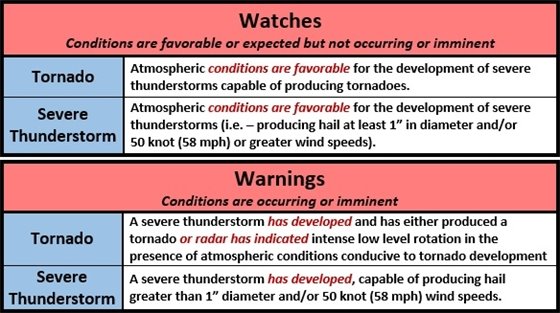
Spring weather can be unpredictable. When severe weather hits unexpectedly, the risk of injury and weather-related death increases, so planning makes sense. Prepare for storms, floods, and tornadoes as if you know in advance they are coming, because in the spring, they very likely will.
Spring is the time of year when many things change—including the weather. Temperatures can swing back and forth between balmy and frigid. Sunny days may be followed by a week of stormy weather. Sometimes extreme weather changes can occur even within the same day. Mark Twain once said, “In the spring I have counted one hundred and thirty-six kinds of weather inside of four and twenty hours.”
Thunderstorms cause most of the severe spring weather. They can bring lightning, tornadoes, and flooding. Whenever warm, moist air collides with cool, dry air, thunderstorms can occur. For much of the world, this happens in spring and summer.
Because spring weather is so unpredictable, you may be unprepared when severe weather hits—particularly if you live in a region that does not often experience thunderstorms, tornadoes, or flooding. And when severe weather hits unexpectedly, the risk of injury and death increases. So planning ahead makes sense; prepare for storms, floods, and tornadoes as if you know in advance they are coming, because in the spring, they very likely will.
Advance planning for thunderstorms, lightning, tornadoes, and floods requires specific safety precautions. You can follow many of the same steps for all extreme weather events. Keep an emergency kit on hand.
Prepare your family members for the possibility of severe weather. Tell them where to seek appropriate shelter as soon as they are aware of an approaching storm. Practice your emergency plan for every type of severe weather. Show family members where the emergency supplies are stored, and make sure they know how to turn off the water, gas, and electricity in your home.
Often by the time we are aware of an approaching storm, we have little if any time to prepare for it. But we do know that when spring arrives, thunderstorms, tornadoes, and floods are real possibilities. So why not take the surprise factor out of severe weather and prepare yourself, your family, and your home? If thunderstorms, tornadoes, and floods do occur, you’ll be ready for them.
General Safety
- Gather food and emergency supplies to last for at least 72 hours in the event you must remain sheltered.
- Check your area’s weather forecast each morning. Monitor it periodically throughout the day to receive current weather updates and alerts.
- Have reliable and backup forms of communication in case of an emergency.
Tornado Safety- Always go to the lowest level of your home, get under something heavy and sturdy, then cover your head with your arms and hands.
- If you can’t shelter underground, move to an inside room or hallway and stay away from windows. If possible, get into a bathtub or under a bed or sofa.
- Vehicles can easily be tossed around so do not remain inside your vehicle.
- If you get caught outside, lie flat on the ground facedown away from vehicles and trees. Cover your head with your hands.
- Be aware of flying debris; most storm-related deaths and injuries ar¬¬¬e caused by flying objects.
- In a building with multiple levels, go to an interior area away from windows and avoid elevators. Interior stairwells are good places to shelter in these circumstances.
Flood Safety- Do not walk or drive through floodwaters. It takes only six inches of moving water to knock a person down, and 12-18 inches of water can carry away any vehicle.
- Obey evacuation orders immediately and do not go into barricaded areas. Lock your home when you leave and disconnect power if you have time.
- Don’t go into any room where electrical outlets are submerged.
Lightning Safety- If you can hear thunder, then lightning is close enough to strike you; move to an inside area.
- When outside, immediately move away from hills and elevated areas. Find an enclosed building or non-convertible vehicle metal topped car with the windows up.
- When indoors, stay off equipment that can put you in direct contact with electricity such as computers and corded phones.
- Stay away from windows and avoid running water.
Information obtained from cdc.gove/nceh/feathers/springweather and hillcrestclaremore.com/news/spring-weahter-safety-tips. |
|
|
|
|
|
Safety PuzzleThe monthly Safety Puzzle is now available on the intranet under the Safety tab. If you have any questions, please contact Melissa Bradford. |
|
|
|
Comings, Goings and Anniversaries
March Arrivals- Cheryl Quinn
- Amberly Riegler
- Amber Pragar
- Jayme Wischer
- Trisha Price
- Nicholas Weatherman
- Don Mers
- Jeff Allen
March Departures- Destinie Kuhnhein
- Lamont Ford
- Susan Osterhage
- Andrew Kratz
- Gary Gullion
- Haley Densler
- Sarah Zolandz
- Donnie Roberts
April Birthdays - 4/2 - Jennifer Tyson
- 4/2 - Alex Woods
- 4/2 - Michael Stork
- 4/3 - Elizabeth Bach
- 4/5 - Jonathan Fletcher
- 4/6 - Russ Horsley
- 4/10 - Matthew Wooten
- 4/10 - Mark Andrew Groger
- 4/10 - Derek Hunt
- 4/11 - Kyle Boyle
- 4/13 - Eugene Kiser
- 4/16 - Arthur Malone
- 4/18 - Brian Warken
- 4/21 - Chris Cornett
- 4/28 - Shelley Padgett
- 4/29 - Kevin Stenger
April Employment Anniversaries - Darleen McGuire - 21 years
- Chris Cornett - 20 years
- Richard Dixon - 20 years
- Sean Blake - 18 years
- Sarah Griffith - 17 years
- Jonathan Fletcher - 14 years
- Britney Carson - 14 years
- Janet Malone - 14 years
- Loraine Braun - 8 years
- Kobie Baker - 5 years
- Annette Haas - 5 years
- Steve Willhoite - 5 years
- Mark Rodgers - 3 years
- Anthony Fey - 3 years
- Chris Cole - 3 years
- Madison White - 1 year
Staff birthdays are also available in the daily calendar on The Pipeline. |
|
|
|
|
|